Consistent-Quality Fine Jewelry Supplies for Small‑Scale Brands
Small-scale fine jewelry brands face unique operational challenges that large luxury jewelry groups rarely encounter. While big brands secure long-term, bulk supply contracts with stable quality control and dedicated production lines, emerging boutique jewelry labels often struggle with fluctuating material quality, inconsistent batch craftsmanship, and unreliable supplier cooperation. For small brands focused on building long-term customer trust and brand reputation, stable supply quality is not merely a production requirement but the core foundation of sustainable business growth. Many emerging jewelry enterprises fail to scale not due to poor design or insufficient market demand, but due to frequent quality inconsistencies in raw materials and accessories that trigger customer complaints, return rates, and damaged brand credibility. As an experienced fine jewelry manufacturer serving global small and mid-sized jewelry enterprises, we break down professional, actionable standards and practical operational strategies to help small brands establish a stable, high-quality supply system and avoid common sourcing pitfalls in the fine jewelry industry.
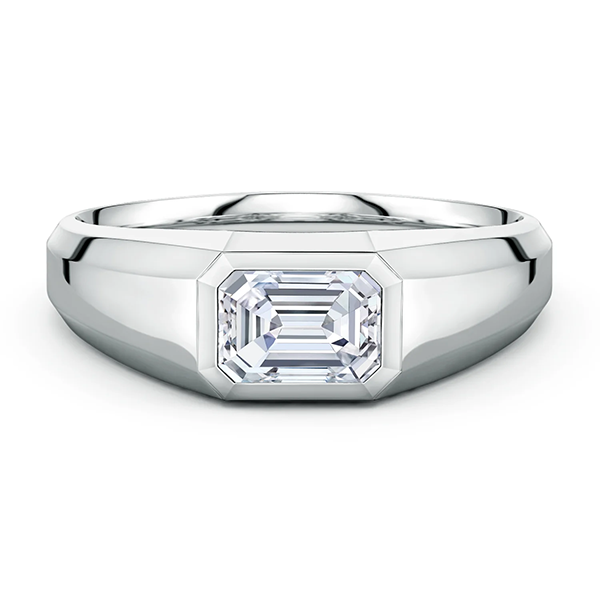
Professional Supplier Evaluation Framework for Stable Supply Cooperation
The core of stable fine jewelry operation lies in selecting qualified and reliable cooperative factories, and scientific supplier screening can fundamentally reduce quality fluctuation risks. A complete and rigorous jewelry supplier vetting system covers factory qualification verification, production process standardization, quality inspection mechanism, and after-sales service guarantee, forming a full-link evaluation system suitable for small-batch customized orders. Unlike large-scale jewelry manufacturers that only accept bulk orders, excellent suppliers for small-scale brands need to balance low minimum order quantities, flexible customization capabilities, and strict quality control standards to adapt to the small-batch, multi-style operational characteristics of boutique jewelry brands.
In the supplier vetting process, small brands should first verify basic factory qualifications, including industrial and commercial certification, jewelry production qualification, and international material testing certification. Qualified manufacturers must provide complete material inspection reports, production process records, and finished product quality testing documents for each batch of products. Secondly, on-site factory inspection or remote production audit is essential to check whether the production equipment is advanced, whether the production line is standardized, and whether the quality inspection team is complete. Many small brands only focus on unit price when selecting suppliers, ignoring the importance of standardized production management, which leads to problems such as uneven material texture, inconsistent electroplating color, and unstable inlay firmness in subsequent mass production. A sound supplier management system can effectively solve these problems and lay a foundation for long-term stable cooperation.
Core Standards for High-Quality Fine Jewelry Material Selection
Material quality directly determines the grade, durability, and market reputation of finished jewelry, making precise material selection the top priority of jewelry material sourcing. Fine jewelry covers high-value core materials such as precious metals and artificial gemstones, as well as auxiliary accessories including clasps, chains, and inlay brackets. Every material link affects the overall quality of finished products, and small brands need to formulate unified material selection standards to eliminate batch differences caused by different material sources.
In precious metal material selection, mainstream fine jewelry materials such as sterling silver, 14K gold, and 18K gold must meet international purity standards. Manufacturers need to provide metal component testing reports for each batch of materials to ensure no adulteration of inferior metals and stable metal hardness and ductility, which is crucial for subsequent cutting, polishing, and inlay processes. For surface treatment processes such as electroplating and polishing, unified process parameters must be formulated to ensure consistent gloss, color difference, and wear resistance of finished products in different batches. Inferior metal materials are prone to oxidation, discoloration, and deformation after long-term wear, which will greatly reduce customer experience and brand reputation.
In terms of gemstone material selection, with the booming market demand for eco-friendly and cost-effective high-end fine jewelry, lab-grown gemstones have become the mainstream choice for small and medium-sized jewelry brands. Professional production and processing institutions can provide standardized gemstone materials for customized jewelry production, ensuring consistent color, clarity, and cutting specifications of each gemstone. Scientific material sourcing standards enable small brands to maintain unified product quality while controlling costs, forming core competitive advantages in the boutique fine jewelry market.
Batch Stability Control Mechanism for Fine Jewelry Production
The biggest pain point for small-scale jewelry brands in supply cooperation is batch quality instability. Due to small single order quantities, many mixed-order factories adjust production parameters randomly to adapt to different orders, resulting in obvious differences in product details between different batches, including inconsistent electroplating tone, uneven polishing fineness, and inconsistent gemstone inlay tightness. For boutique brands that focus on product uniformity and repeat customer repurchase rates, such quality differences are fatal to brand image building.
Reliable fine jewelry manufacturers adopt fixed production parameter management for long-term cooperative brands. After confirming the product process standard with the brand for the first time, they solidify core parameters including metal proportion, electroplating time, polishing process, and gemstone inlay standards into the production system. For each subsequent supplementary order, production is strictly implemented in accordance with the confirmed parameters to ensure zero difference in product details between different batches. Meanwhile, manufacturers will reserve a certain proportion of raw material inventory for long-term cooperative small brands to avoid quality fluctuations caused by raw material replacement and price fluctuations in the market.
In addition to production parameter solidification, strict batch sampling inspection is also a key link to ensure stability. Each batch of finished products will undergo dimensional inspection, wear resistance test, oxidation resistance test, and inlay firmness test. Unqualified products will be eliminated in full, and production processes will be adjusted in a timely manner to ensure that all products delivered to the brand meet unified quality standards. This standardized batch management mode effectively solves the quality instability problem of small-batch orders and helps small brands maintain consistent product presentation in long-term operation.
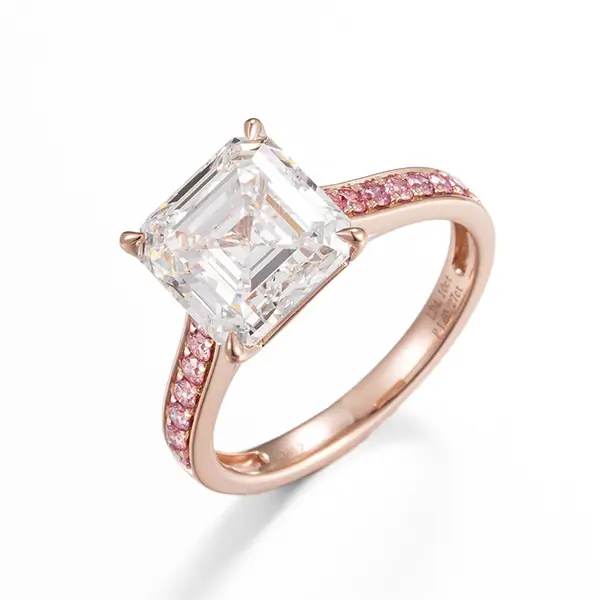
Sample Testing and Pre-Production Verification Practical Guidelines
Complete sample testing and pre-production verification are essential steps to avoid large-scale quality problems, and also the most cost-effective quality control method for small-scale jewelry brands with limited operating budgets. Before placing formal bulk orders, brands must complete multi-dimensional sample confirmation to lock all product standards and eliminate hidden quality dangers in advance.
The first step is initial sample confirmation. After the manufacturer completes the hand-made sample according to the brand’s design drawings and parameter requirements, the brand needs to check the overall size, proportion, process details, material texture, and gemstone cutting effect of the sample, and put forward modification opinions for non-compliant parts. After the sample is revised and confirmed to be error-free, both parties sign a formal sample confirmation document as the unified standard for subsequent mass production. The second step is small-batch trial production testing. After locking the sample standards, a small batch of trial production is carried out to verify the stability of mechanized production. Many hand-made samples have perfect details, but mass production is prone to process defects, so trial production testing can effectively verify the feasibility and stability of the production process.
The third step is long-term wear simulation test. Fine jewelry products need to have good durability, so manufacturers will simulate daily wear scenarios including friction, sweat corrosion, and temperature change to test the wear resistance, oxidation resistance, and color fastness of the products. Products that pass the long-term test can meet the daily wearing needs of customers and reduce after-sales quality problems. Through the three-step verification mechanism of sample confirmation, trial production testing, and simulation test, small brands can fully control product quality and avoid quality losses caused by blind bulk ordering.
Professional Lab Diamond Supply Solutions for High-End Custom Jewelry
High-end customized fine jewelry represented by diamond rings is the core profit segment of many small-scale jewelry brands, and stable supply of high-quality lab diamonds is the key to supporting brand upgrading and product iteration. As a professional lab diamond factory integrating diamond cultivation, cutting, polishing, and finished product customization, we provide standardized high-quality lab-grown diamond raw materials and finished ring customization services for global small and medium-sized jewelry brands, solving the problems of uneven diamond quality, incomplete specification coverage, and unstable delivery cycle in the traditional supply market.
Different from scattered small suppliers, professional lab diamond production institutions have complete independent production lines and quality inspection systems. All lab diamonds are graded in strict accordance with international 4C standards, with unified color, clarity, cut, and carat specifications, realizing zero difference in batch supply. For small brands engaged in high-end customized jewelry business, standardized lab diamond supply can ensure that each customized diamond ring has stable quality and consistent visual effect, improving customer recognition and brand professionalism.
Many consumers and brand operators have misunderstandings about lab-grown diamond jewelry, thinking that the quality of artificial diamonds is unstable. In fact, standardized industrial production makes lab diamonds have more stable quality and more controllable parameters than natural diamonds. Mature production technology can precisely control the internal crystal structure and optical performance of diamonds, making the fire and brightness of lab diamonds more uniform. Relying on professional lab diamond production capacity, small brands can launch high-cost-performance and high-quality diamond ring products to quickly occupy the mid-to-high-end fine jewelry market.
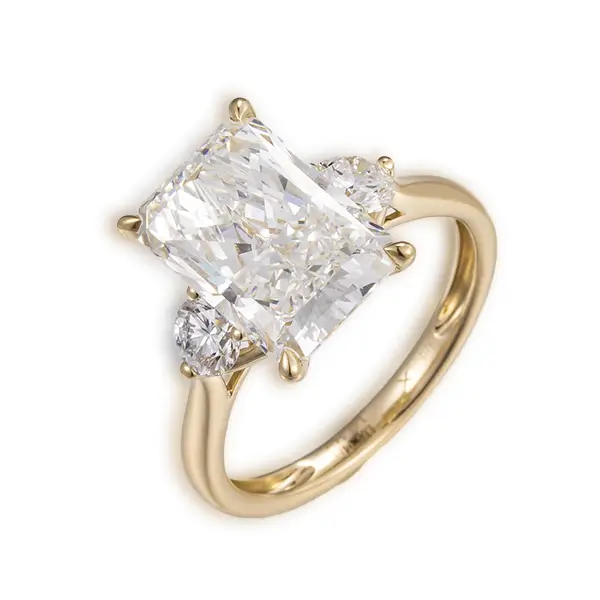
Diversified Supply Support for Small-Scale Fine Jewelry Brand Operation
To meet the diversified and personalized market demands of current fine jewelry consumers, small brands need rich and high-quality fine jewelry supplies support, covering precious metal accessories, gemstone raw materials, inlay parts, and finished product semi-finished accessories. Excellent fine jewelry supply systems not only provide standardized bulk materials but also support personalized customized material processing, adapting to the design iteration rhythm of boutique jewelry brands.
In terms of supply diversity, professional manufacturers can provide multiple material options including S925 sterling silver, titanium steel, K gold, and various lab-grown gemstones such as diamonds, moissanite, and sapphires. Meanwhile, they support personalized processing of different electroplating colors, polishing textures, and inlay processes, helping small brands form differentiated product systems. In terms of supply flexibility, manufacturers support small-batch customized orders and flexible supplementary orders, which perfectly matches the light asset operation mode of small-scale brands, avoiding inventory backlog and capital waste caused by large-batch stocking.
In addition to material supply, professional manufacturers also provide one-stop supporting services including design optimization, process guidance, and quality after-sales guarantee. For small brands without professional production teams and process experience, these value-added services can greatly reduce the threshold of fine jewelry product development and production, help brands quickly launch new products, and improve market competitiveness.
Long-Term Cooperation Advantages for Lab Grown Diamond Ring Companies and Small Brands
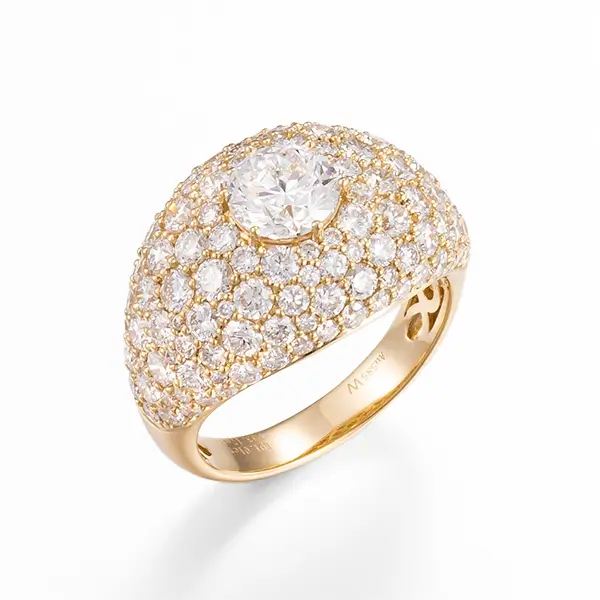
In the mid-to-high-end fine jewelry market, customized diamond ring products have always been the core consumer hot spot. Excellent lab grown diamond ring companies can form long-term stable strategic cooperation with small-scale jewelry brands, providing exclusive customized supply solutions and brand differentiated support. Different from ordinary material suppliers, professional diamond ring customization enterprises have in-depth insight into the market trends and consumer preferences of fine jewelry, and can provide targeted product optimization suggestions for small brands.
In long-term cooperation, professional lab grown diamond ring companies will provide exclusive material parameter standards and process systems for cooperative small brands, forming exclusive product quality advantages that are different from other market brands. Meanwhile, they provide priority production rights and stable delivery cycle guarantees for long-term cooperative brands, ensuring that brands can respond quickly to market order demands and avoid customer loss caused by delayed delivery. In terms of quality guarantee, formal manufacturers provide long-term quality after-sales service for customized diamond ring products, solving the worries of small brands in after-sales operation.
For small-scale fine jewelry brands, cooperating with professional and standardized manufacturers is the fastest and most effective way to achieve stable product quality and sustainable brand development. Through scientific supplier evaluation, standardized material sourcing, strict batch quality control, and complete sample testing mechanisms, brands can completely get rid of the troubles of quality instability and supply uncertainty. In the increasingly competitive fine jewelry market, stable and consistent product quality is the best brand business card, helping small boutique brands accumulate word-of-mouth, expand market share, and finally realize steady and long-term brand growth.